
Parole Disegnate · 22 Oct 2026
The Italy I Left Behind. And the One I Would Still Like to Return To.
Architecture, Genius Loci, and the Culture of Abundance Between Italy and America.
Leggi in italiano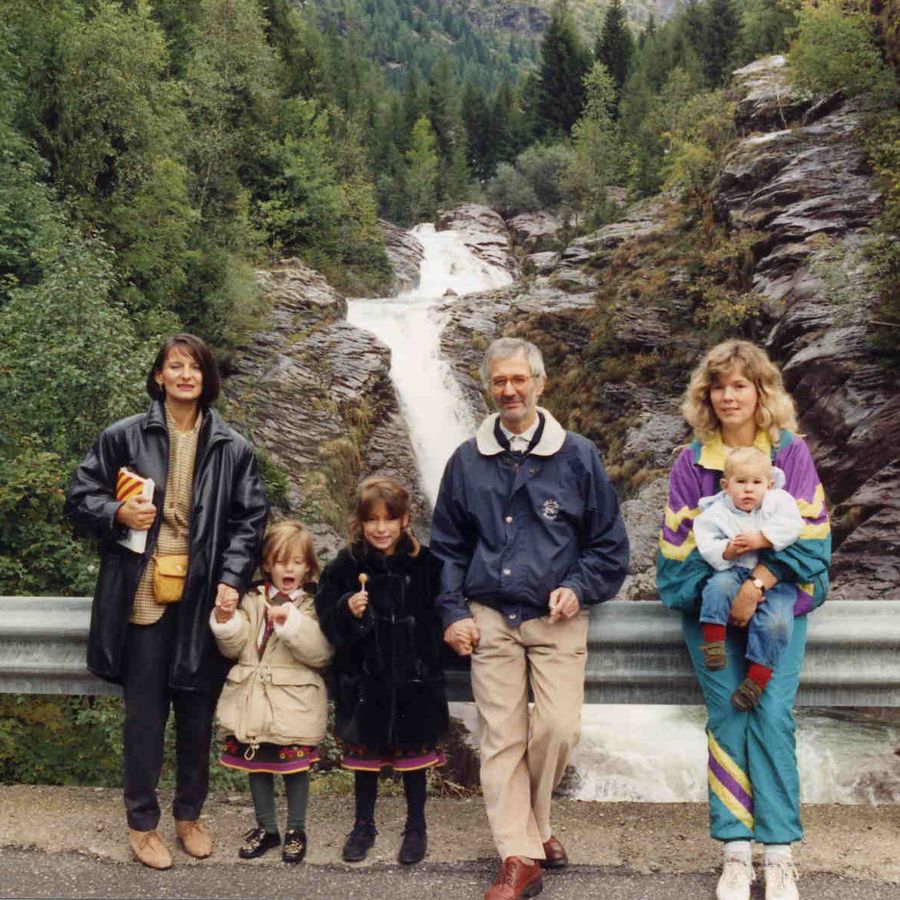
The Memory of a City
What happened to the Italy of the 1990s?
I remember provincial towns such as Crema and Lodi, where prosperity seemed to permeate the urban environment. Historic centers supported a diverse commercial fabric of independent businesses, artisan workshops, and public spaces animated by daily life. Shop windows, interiors, carefully composed displays, and even the way people dressed contributed to an everyday landscape in which economic activity and aesthetic sensibility appeared to belong to the same culture.
This was not necessarily a matter of individual wealth, but of a shared condition expressed through the quality of places and the relationships that gave them life.
It is a personal memory, and a selective one. Italy already faced structural imbalances, inequalities, and economic vulnerabilities during those years. Yet the provincial Italy I remember possessed a distinct identity, shaped by commerce, craftsmanship, and a collective attention to the built environment.
Returning to those same towns today, I sense a discontinuity.
The urban fabric remains largely unchanged. The proportions of the streets, the arcades, the piazzas, and the architectural layers accumulated over centuries still constitute a heritage of exceptional value. What has changed is the relationship between this physical framework and the activities it accommodates.
In many cases, independent businesses have given way to standardized retail models, interchangeable merchandise, and commercial interiors of limited architectural quality. Historic centers increasingly resemble open-air shopping malls, where the specificity of the architectural setting finds little correspondence in the businesses occupying it.
The city retains its form, but part of its contemporary identity weakens.
Beyond Material Preservation
Italy possesses a deeply established culture of architectural conservation. The preservation of materials, the regulation of alterations, and the protection of urban morphology are essential instruments for transmitting our architectural heritage to future generations.
Yet material integrity does not necessarily ensure cultural continuity.
A historic city is a complex system in which urban form, productive activities, social practices, and economic conditions continuously influence one another. Architectural quality resides in buildings, but also in the relationships they establish with collective life.
The ground floor is particularly significant in this relationship. It forms the interface between private property and public space, shaping the visual and functional permeability of the street and contributing directly to the pedestrian experience.
A succession of independent businesses, workshops, specialty shops, and neighborhood services creates a diversity of thresholds, rhythms, and patterns of occupation that a homogeneous commercial structure can rarely reproduce.
This is not an argument for romanticizing traditional shops. Cities must evolve and accommodate new forms of commerce. The problem arises when transformation becomes indifferent to context, reducing urban diversity to a sequence of interchangeable businesses.
A building may be restored with meticulous historical accuracy while remaining embedded in an urban environment that has progressively lost its functional and cultural richness.
The façade survives, but the relationship between architecture and society changes.
The preservation of historic centers must therefore extend beyond the conservation of physical structures to include the conditions that allow their economic and social fabric to continue evolving.
The Economic Dimension of the Urban Landscape
The transformation of commerce in Italian historic centers cannot be separated from the evolution of the middle class.
In the decades following World War II, small and medium-sized enterprises, artisanal businesses, professional practices, and independent retail shaped not only Italy’s economic structure but also the organization and character of its cities. For a long time, provincial Italy sustained a distinctive relationship between production, consumption, and spatial quality: businesses small enough to be rooted in their communities, and customers with enough purchasing power to support investment in commercial interiors and in the quality of what was sold.
The prolonged stagnation of incomes, changes in retail distribution, competition from digital platforms, and rising operating costs have altered this equilibrium.
The impact concerns not only the number of businesses, but their nature. When economic models favor standardization and competition primarily on price, incentives to invest in distinctive interiors, material research, and the quality of the commercial experience diminish.
A decline in quality is not an inevitable consequence of limited economic resources. Architecture and public spaces of remarkable dignity can be created with modest means. Rather, it reflects a shift in priorities, investment patterns, and the value assigned to the everyday environment.
The urban landscape thus becomes an indicator—though not a comprehensive measure—of the economic and cultural transformations of the society that produces it.
The Architecture of Abundance
What stands out in my memory of Italy in the 1990s is not monumentality, but the quality of the ordinary.
Attention to commercial interiors, window displays, material selection, and the relationship between buildings and streets was part of a widely shared sensibility.
Beauty was not confined to architecturally significant landmarks. It extended into everyday activities and spaces.
This condition might be understood as an architecture of abundance: not necessarily abundance in a financial or material sense, but a willingness to invest resources, attention, and design intelligence in the surrounding environment.
The city expressed continuity between its inherited architectural heritage and what contemporary society continued to produce within it.
It is precisely this continuity that now appears to have been interrupted in certain contexts.
Historic buildings retain their formal characteristics, while the businesses they contain increasingly adopt visual languages with little relationship to their setting.
The result is a dissonance between container and content, between architectural memory and contemporary material culture.
The risk extends beyond a decline in aesthetic quality. It is the gradual transformation of the historic city into a scenic backdrop, where identity is entrusted almost exclusively to the architecture of the past.
Leaving by Choice
I left Italy in 2012.
Not because I lacked employment, nor because I was compelled to seek a professional future elsewhere. My departure was motivated by a personal desire for exploration and the search for an environment in which I could test my ambitions and abilities.
I do not identify with the label of the “cervello in fuga,” the Italian “brain drain.”
In the United States, I built my professional path from the ground up, as a woman and an immigrant, without an established network of professional relationships or a family business to inherit.
The process required adaptation, risk-taking, learning, and the continuous demonstration of my capabilities.
What defined this experience most profoundly was the relationship between individual initiative and the possibility of growth.
I found an environment where one project could lead to new professional relationships, where acquired experience could translate into greater responsibilities, and where personal investment could generate further opportunities.
I do not consider my trajectory representative of the American experience as a whole. Economic inequality, barriers to credit, and structural disadvantages exist in the United States as well.
Still, in my experience, the economic and cultural environment demonstrated a remarkable capacity to accommodate and amplify individual initiative.
This leads me to question what possibilities I might have encountered had I remained in Italy.
There is no definitive answer, but the question remains central to my understanding of the differences between these two countries.
Miami and the Abundance State of Mind
Living and working in Miami means engaging with an urban model profoundly different from the Italian one.
The city lacks the historical continuity, morphological complexity, and quality of public space that characterize many European centers. Its development is often fragmented, accelerated, and contradictory. Real estate expansion does not always translate into a better urban experience.
Yet within this environment, I encountered something I consider fundamental: a collective attitude oriented toward possibility.
What I would describe as an abundance state of mind.
This is not simply about financial resources or the display of wealth. It is a state of mind in which the future is understood as an open field, and individual initiative becomes a means of shaping it.
This attitude reveals itself in the ease with which people imagine new ventures, propose collaborations, embrace risk, and regard growth as an achievable prospect.
I recognize it in the Design District, in Miami Beach, in professional circles, and in everyday conversations. Not necessarily in the formal quality of the buildings, but in the energy of the people who inhabit and transform them.
It is important to distinguish my experience from the broader reality of the city. Miami faces profound inequalities, high housing costs, and uneven access to opportunity. My perspective is shaped by the professional environment in which I operate.
Yet this awareness makes the comparison all the more revealing.
Italian architecture possesses a cultural depth that Miami could hardly replicate. And still, in my experience, Miami expresses a confidence in the future that I now struggle to perceive with the same intensity in many Italian cities.
The difference does not lie solely in the buildings.
It lies in the communities that inhabit them.
Genius Loci as a Collective Construction
In architectural discourse, the concept of Genius Loci refers to the spirit of place: the set of characteristics that gives an environment its recognizable identity.
In the phenomenological interpretation developed by Christian Norberg-Schulz, place is not abstract space but an environment endowed with character, in which nature, construction, and human experience contribute to defining the meaning of dwelling.
To this interpretation, I would add a personal consideration.
Genius Loci is not merely something we inherit. It is also something a community continuously produces.
It does not reside exclusively in urban morphology, light, materials, or historical memory. It is also expressed through behavior, aspirations, activities, and the relationships that develop within the built environment.
The character of a city depends not only on what it physically is, but also on what its inhabitants believe can be achieved within it.
In this sense, Miami represents, for me, a particularly interesting case.
Despite lacking the historical density of an Italian city, it has developed a contemporary identity shaped by migration, entrepreneurial initiative, cultural exchange, and a continuous redefinition of its possibilities.
Its spirit is not contained exclusively within its architecture. It is also produced by the attitudes and actions of the people who inhabit it.
Likewise, an Italian historic center may preserve its urban structure while undergoing a profound transformation in character as its social composition, economic activities, and collective expectations change.
Physical preservation alone cannot guarantee the continuity of Genius Loci.
This raises a central question for architectural practice: if the character of a place is also collectively constructed, then urban quality depends not only on how spaces are designed, but also on the conditions that allow people to develop their lives within them.
A community that imagines, invests, and builds participates in the production of urban identity just as meaningfully as the architect who designs its buildings.
Design Culture and Entrepreneurial Culture
Italy has built much of its international identity through its ability to combine production, formal experimentation, and artisanal expertise.
Italian design remains one of the most recognizable expressions of this achievement.
An exceptional cultural heritage, however, does not automatically guarantee the economic conditions necessary for its continued evolution.
Design excellence requires businesses capable of investing, accessing financing, attracting talent, and developing new markets.
Preserving a productive culture therefore also requires renewing the structures that sustain it.
It is in this relationship between culture and economic initiative that I perceive a significant difference between the two contexts.
In the United States, within my professional experience, entrepreneurial ambition is frequently understood as an ordinary component of individual and collective development.
In Italy, I sometimes perceive a more cautious attitude toward growth, expansion, and economic risk.
Both countries have dynamic entrepreneurial communities and environments resistant to change.
Still, the way a society values individual initiative influences its capacity to generate transformation.
Small business owners, artisans, and independent professionals are not merely economic actors. Through their activities, they contribute to the production of contemporary urban space.
Creating the conditions for their presence is therefore also an indirect investment in the quality of the city.
Preserving the Capacity to Transform
I have always imagined the possibility of returning to Italy.
Not to resume the life I left behind in 2012, but to bring back some of the knowledge, experiences, and perspectives I have developed elsewhere.
Today, that possibility raises questions extending beyond the personal dimension.
I wonder whether the Italian system can accommodate those who wish to return to invest, develop projects, and contribute to the transformation of the built environment.
More broadly, I question whether policies dedicated to urban heritage preservation can be accompanied by conditions that encourage new economic and cultural initiatives.
The regeneration of historic centers cannot be limited to building restoration or the redesign of public spaces.
It requires attention to the functional composition of ground floors, the affordability of commercial premises, the presence of residents, the continuity of local activities, and the capacity to accommodate new forms of production and services.
This does not mean freezing the urban fabric within an idealized image of the past. It means preserving its ability to adapt.
Architecture cannot independently resolve economic and social problems of this complexity. It can, however, help define environments capable of sustaining relationships, activities, and diverse forms of occupation.
The historic city should not be regarded as a finished object.
It is a living organism whose identity also depends on its capacity for transformation.
The Italy I Imagine
I do not wish to recreate the Italy of the 1990s.
The memory of that period is instead a starting point for examining the relationship between urban quality and economic conditions.
What I hope to rediscover is continuity between architectural culture, production, and everyday life.
A society in which the value of existing heritage is not separated from the capacity to create new quality.
Where individual initiative can contribute to the transformation of cities, and architecture continues to express contemporary culture rather than serving exclusively as evidence of the past.
The Italian cities we admire today are the result of centuries of investment, exchange, experimentation, and ambition.
Their identity does not derive from immobility, but from the continuous layering of interventions, activities, and ideas.
The contemporary challenge lies in preserving this generative capacity, recognizing that the spirit of a place cannot be sustained through the conservation of its buildings alone.
Italy’s most important heritage is not simply the architecture we have inherited, but the culture that made its creation possible.
I do not know whether I will one day return to live in Italy.
But I do know that, as I observe its cities, I keep asking not so much what they have lost, but what they might still become.
Perhaps that is the Italy I would like to return to.
Reference: Christian Norberg-Schulz, Genius Loci: Towards a Phenomenology of Architecture (New York: Rizzoli, 1980).
Comments · 0
No comments yet.